· Marc Price · ai-marketing-automation · 14 min read
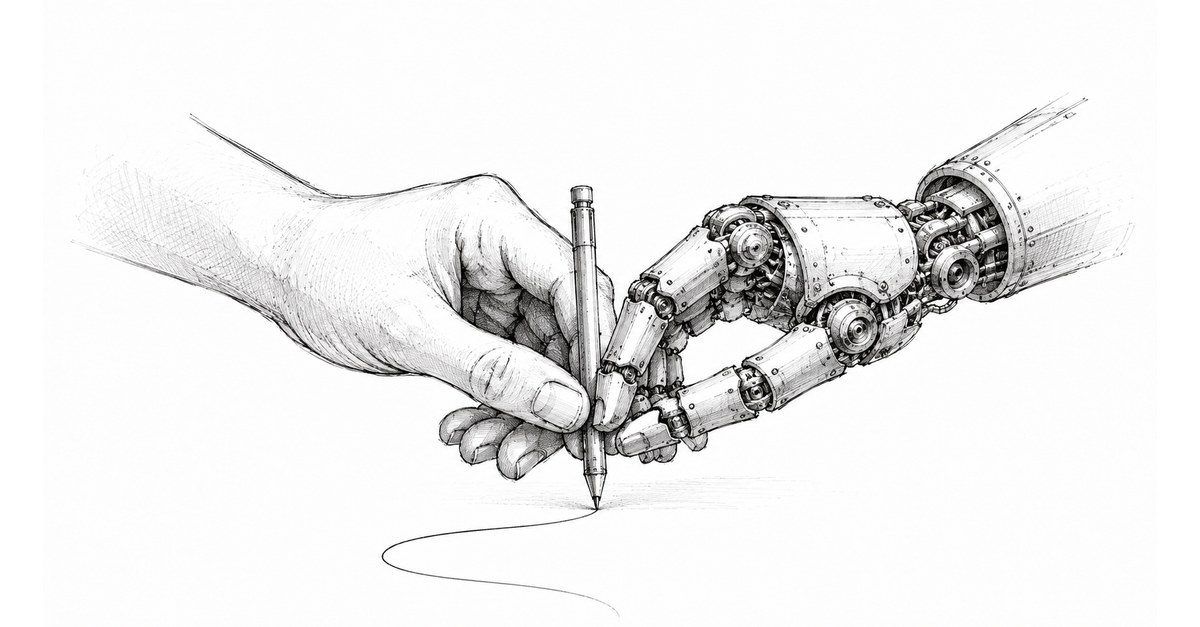
Empower, Don't Replace: What Claude Cowork, Design and Code Mean for Your Marketing Team
Claude can now draft, design, research and report. But the win isn't a smaller team - it's a sharper one. Here's what your marketers do, what Claude does, and why bespoke beats another licence.
TL;DR
- Claude has moved well past the chat box. Cowork completes multi-step knowledge work on your behalf, Claude Design turns a brief into on-brand visuals, and Claude Code lets technical teams build, harden and ship bespoke solutions far faster.
- The point isn’t a smaller team. It’s taking the dull, repetitive grind off good people so they spend their hours on judgement, direction and decisions - the work they were actually hired for.
- Anthropic’s own growth marketing function was run for ten months by essentially one person, cutting ad creation from 30 minutes to 30 seconds and case-study drafting from 2.5 hours to 30 minutes.
- A bespoke workflow, built once, can cost less than a single year of enterprise seats for a mid-sized marketing team - and it bends to your process, not a vendor’s roadmap.
- None of this replaces your strategy, your brand voice or your judgement. It accelerates the quality you’ve already built.
For roughly ten months, the entire growth marketing function at one of the most valuable companies on earth was run by essentially one person. Not a team of twelve. The output, though, looked like a team of twelve and then some - ad production that used to take 30 minutes done in 30 seconds, and a steady stream of campaigns that would normally need a small department.
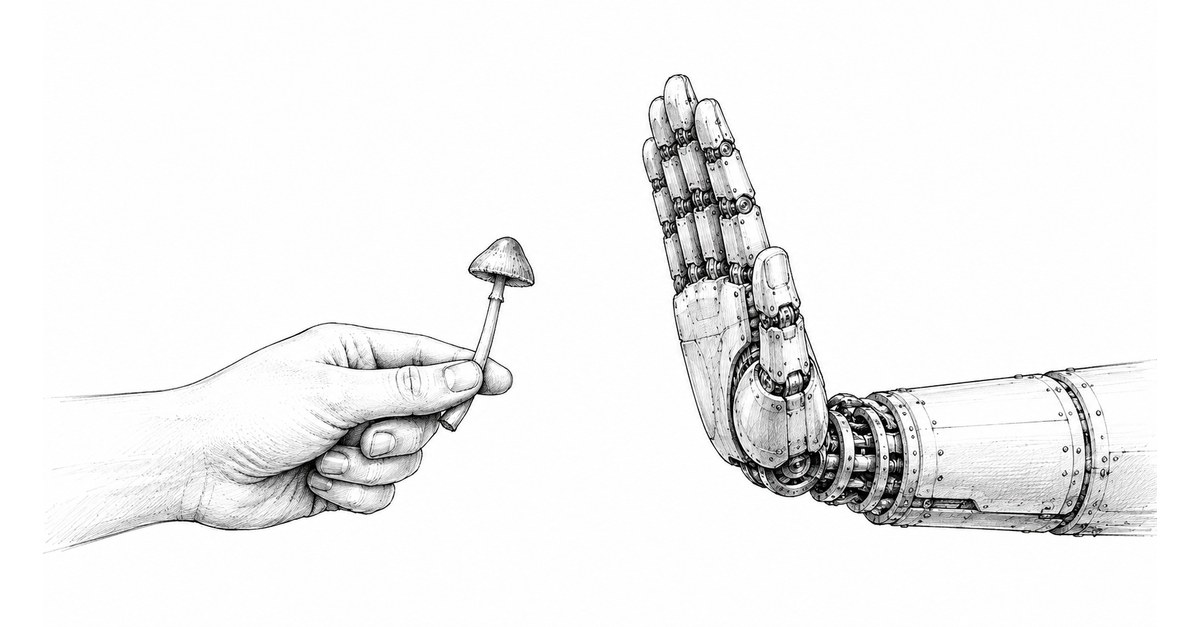
If that makes you slightly uneasy, good. But probably not for the reason the headlines want you to feel it. The lesson here isn’t “fire your marketers”, and it certainly isn’t “hand everyone a command line and tell them to get on with it”. It’s something more useful, and most of the breathless coverage gets it backwards.
So let’s get the framing right before we go any further. Your product is good. Your brand is good. The work your team does is good - you’ve spent years getting it there, and the quality is not in question. What changed, quietly, over about eighteen months, is that the tedious 80% wrapped around that good work stopped needing a human. The drafting, the resizing, the reformatting, the weekly number-pulling: gone. What’s left is the part only your people can do. That isn’t a threat to your team. It’s a promotion.
This is the third in a short run of posts on where AI has actually got to. We’ve covered why agentic AI has crossed from experiment to operating reality and how tool use turns a clever talker into a working colleague. This one is about what that means for a marketing department specifically - and the bit nobody puts on the sales slide: the money.
What can Claude actually do now?
If your mental model of “AI at work” is a chat window you paste questions into, you’re about two years out of date. Anthropic has quietly turned Claude into a small suite of surfaces, each shaped for a different kind of work. Same underlying intelligence; what differs is who it’s built for and how much of the task it carries on its own.
- Claude (chat) - the thinking and drafting partner most people meet first. Good for pressure-testing a strategy or working through a hard decision out loud. You stay in the loop on every step.
- Claude Cowork - the step change. It runs on your desktop, reads and writes files in folders you grant it, and completes multi-step tasks end to end. You define the outcome; it works out how to get there. It’ll even run on a schedule - a morning briefing assembled overnight from your inbox, Slack and ad platforms, waiting for you with your coffee.
- Claude Design - a canvas for visual work: landing pages, social assets, decks, prototypes. It reads your existing brand first, so what it produces is on-brand rather than generic. One early user recreated their most complex pages in 2 prompts where other tools had needed more than 20.
- Claude in Excel, PowerPoint and Chrome - the same capability inside the tools your team already lives in.
- Claude Code - the engine room. It lowers the barrier to serious development: technical teams build more capable solutions faster, and test them harder for performance and security. It’s the most powerful surface here, and the one we’ll come back to - because it rewards professional hands, not a quick dabble.
Why “empower” beats “replace”
It’s tempting, and lazy, to read all of this as a headcount cut. That misreads what these tools are good at.
Claude is exceptional at the mechanical middle of knowledge work: generating variations, reformatting, summarising, validating, cross-checking against rules. It is not a substitute for taste, strategy, brand judgement, or the decision to spend money. Anthropic’s own marketers say this plainly - the AI doesn’t replace strategy or voice; it removes the tedium around them.
Here’s the more honest reframe. The work that gets skipped because nobody has time - scanning every piece of feedback, testing twenty ad variants instead of three, auditing the data weekly instead of quarterly - now gets done. Your people stop being the bottleneck on volume and become the bottleneck on quality, which is exactly where you want them. This is the same “a human or two in the loop” pattern we’ve watched outperform much larger teams for a while now - it has simply got far more capable.
What does the human do, and what does Claude do?
This is the crux. Get the boundary right and you have leverage; get it wrong and you either drown a person in busywork or hand a high-stakes call to a tool that was never meant to carry it. For every area of work there’s a clean split: Claude does the assembly, the human owns the direction.
| Area | What Claude does | What the human does (and keeps) |
|---|---|---|
| Strategy & positioning | Summarises inputs, pressure-tests arguments, surfaces gaps | Sets the strategy, owns the positioning, makes the call |
| Research & competitive intel | Gathers and synthesises across sources into a structured brief | Decides what actually matters, validates it, draws the conclusion |
| Copy & content | Drafts variants from your brand voice and performance data | Defines the voice, selects, edits, signs off on the message |
| Design & assets | Generates on-brand options and prototypes at speed | Directs the creative, approves, adds the final polish |
| Campaign ops & reporting | Builds dashboards, assembles reports, validates formats | Interprets the numbers, sets budgets and bids, decides next steps |
| Localisation | Adapts messaging across regions and languages at scale | Native-speaker review and cultural sign-off before anything ships |
| Approvals & publishing | Prepares upload-ready, validated outputs | Approves before anything goes live - always |
Notice the pattern. Claude takes the part that scales badly with human hours. The human keeps the part that should never be automated: the judgement, and the moment of saying yes, publish this.
A week in the life: marketing at a global tech vendor
Let’s make it concrete. Picture a mid-sized B2B technology vendor - say a cloud-security platform scrapping it out in a crowded global market against larger, better-funded incumbents. The marketing team is six people. They’re outgunned on budget and headcount, and they need to ship more, in more markets, without dropping the ball on brand or accuracy. Sound familiar?
Here’s the week once the tools are in place.
Monday, before anyone’s in. A scheduled Cowork task ran overnight. It pulled the weekend’s ad performance, competitor announcements, web analytics, sales-call themes and inbound questions, and assembled a one-page brief. The head of marketing reads it over coffee and sets three priorities. Claude assembled the picture; the human decided what to do about it.
Campaign build. A launch needs a landing page, ten search-ad variants and a set of social assets in three aspect ratios. In Claude Design, the team goes from outline to on-brand draft page in a single conversation. A purpose-built workflow - commissioned once and wired into their stack - takes the campaign data and brand-voice rules and returns fifteen headlines and four descriptions, validated against character limits, as an upload-ready file. Every output is a starting point: a marketer reviews each one. Does the value proposition land? Is the tone right? Does it stand apart from the competition?
Research and narrative. For an analyst-facing thought-leadership piece, the team hands Cowork a folder of analyst reports, competitor positioning and anonymised sales-call transcripts and asks for a synthesis of where the market’s heading. It comes back structured and sourced. The human takes it from there - the point of view, the spiky opinion, the argument worth making, is theirs. (As ever, the foundations are human first; the AI scales them.)
Localisation. The launch runs in EMEA, North America and APAC. Claude adapts the messaging per market in minutes; native-speaker reviewers on the team sign it off. What used to be a two-week agency loop is now a one-day internal pass.
Reporting. Instead of three people re-pulling the same numbers, the team opens a live Cowork dashboard with drill-downs by channel. The weekly review is now about decisions, not data-gathering.
The result isn’t “five marketers doing the work of six”. It’s six marketers doing the work of a far larger team, while spending their actual time on the things only they can do.
It plugs into what you already run
A fair objection: doesn’t this mean ripping out the stack you’ve built? No - and this is the part people miss.
Claude’s agentic tools reach into the software you already run through open connectors and APIs: your CRM, ad platforms, file store, analytics, design tools. We unpacked the mechanics of this in the tool-use post, so we won’t relitigate it here. The short version: the intelligence sits in the middle and the integrations radiate outward. You’re extending your existing capability, not replacing it - Claude Design hands off to Canva, Claude Code wires up Shopify, Google Ads, Meta’s APIs, your warehouse, more or less anything with a door to knock on.
The bit nobody puts on the slide: the economics
Now the part that matters to anyone who signs off a budget.
The agentic surfaces - Cowork and Design - are bundled into Anthropic’s existing paid plans at no separate charge. A Pro seat is roughly $20 a month. Now hold that next to the enterprise marketing stack a mid-sized team typically carries:
| Option | Typical annual cost |
|---|---|
| Marketing automation, Professional tier (3 seats) | ~$10,000+ |
| Marketing automation, Enterprise tier (5 seats, before add-ons) | ~$43,000+ |
| A full mid-market martech stack (licences, implementation, ops) | $120,000-$350,000+ |
| Enterprise platform implementation alone | $10,000-$50,000+ |
Here’s the uncomfortable question those numbers raise. A meaningful chunk of what teams pay enterprise prices for is grind - the reformatting, the variant-spinning, the report assembly - dressed up as a platform feature. And we already know that nearly half of AI and martech purchases disappoint, almost never because the technology couldn’t do it, but because it was bought before anyone worked out what they actually needed.
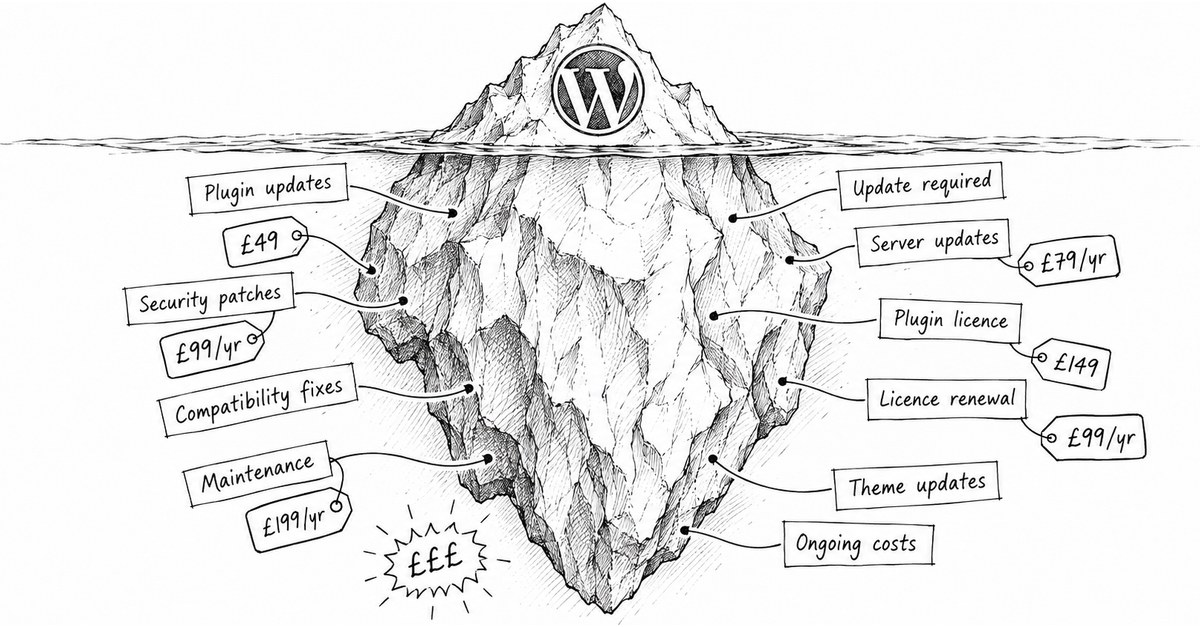
So consider the alternative. Anthropic didn’t buy a platform to generate those ad variants and validate that copy. They had the tooling built with Claude Code - the kind of thing that used to need a sizeable engineering effort or a five-figure custom-development project, now done in a fraction of the time. That’s the real saving. A specialist partner can build you a bespoke workflow, once, that does exactly the job your team needs - and it can come in under a single year of enterprise seats for a mid-sized team. You own it. It doesn’t meter you by contact count. And it bends to your process instead of forcing your process to bend to a vendor’s roadmap. It’s the same logic as the unglamorous automation that quietly beats the hype: boring, owned and working tends to win.
You’ll still want the platforms that genuinely earn their keep. Just stop paying enterprise rent on the parts that don’t.
Where is this already working?
The most useful proof point is Anthropic itself, because - unusually - they publish the numbers.
For roughly ten months, a single growth marketer ran their entire performance function - paid search, paid social, app stores, email and SEO - on the back of tooling built with Claude Code. In their own write-up, the headline results across the marketing org were:
- Ad creation: 30 minutes down to 30 seconds.
- Customer marketing: case-study drafting from 2.5 hours to 30 minutes - around 10 hours saved per week.
- Digital marketing: a 5x productivity increase year on year.
- Product marketing: 5-10 hours saved per launch.
- Partner marketing: trade-show prep cut by 40%.
A caveat worth being honest about: he was working inside an engineering-saturated company, where firing up a command line is nobody’s idea of intimidating. Most marketing teams aren’t - and shouldn’t have to be. The point isn’t that your marketers should learn to build; it’s that this class of tooling, built properly, produces these kinds of savings. And every one of those workflows sat on a human foundation - the brand voice, the examples, the rules were written by people first, with Claude scaling and testing on top. Beyond Anthropic, the published customer stories span finance, legal, healthcare and software, and they all have the same shape: the customer is the hero, the AI is the capable assistant, and the wins are counted in hours saved and output gained.
Where a partner comes in
There’s a catch in those success stories, and it’s worth being honest about.
The most powerful surface - Claude Code - is the engine room. It’s what built the Figma plugin, the ad workflow, the bespoke connectors. It’s also a developer-grade tool, and that’s rather the point: in capable hands it’s transformative. Doing it well, safely and maintainably - wiring it into your real systems, handling your data properly, testing it hard for performance and security, building something your whole team can rely on rather than a personal hack that breaks the first time an API changes - is a craft.
That’s the part most businesses are better off not running solo. You want someone who lives in this world: who can scope the right workflow, build it on Claude Code, connect it to your stack, and hand you something robust that your people then drive.
That’s what we do. Aandai builds bespoke AI and automation for B2B teams - the connectors, the workflows, the internal tools - on exactly these foundations. We take the grind off your team and put the controls firmly in their hands, at a fraction of the cost of stacking up another year of enterprise licences. If this post made you think we could do that - you’re right, and we should talk.
Book a discovery call and let’s map out what’s possible for your team.
Frequently asked questions
Is this about replacing my marketing team with AI?
No - the opposite. The approach automates the repetitive, time-consuming work so your people spend their hours on strategy, brand judgement and decisions. A human still directs the work and signs off anything that ships.
What’s the difference between Claude Cowork, Claude Design and Claude Code?
They run on the same intelligence but suit different work. Cowork completes multi-step knowledge tasks on the desktop for non-developers. Design produces on-brand visuals and prototypes on a canvas. Claude Code is a developer-grade tool for building bespoke software, plugins and connectors - usually best run with a partner.
Do I need to be technical to use these tools?
For Cowork and Design, no - they’re built for non-technical knowledge workers. Claude Code is different: it’s a developer-grade tool that makes capable technical teams dramatically faster. Production builds that connect to your real systems, tested properly for performance and security, are a job for specialists - not a weekend experiment.
How does this save money versus enterprise software?
The agentic tools come bundled in existing paid plans, and a bespoke workflow built once by a partner can cost less than a single year of enterprise seats for a mid-sized team. You own the result, and it bends to your process rather than a vendor’s pricing model.
Where’s the proof this actually works?
Anthropic ran their entire growth marketing function with essentially one person for ten months using these tools, cutting ad creation from 30 minutes to 30 seconds. The published figures across their marketing org are detailed in their own case study, linked below.
References
- How Anthropic uses Claude in marketing - Anthropic
- Claude Cowork - Anthropic
- Claude Design - Anthropic Labs
- Claude Code overview - Anthropic docs
- Customer stories - Anthropic
Marc Price is the founder of Aandai, a B2B automation and AI consultancy helping mid-market businesses achieve more with less. With 24+ years in B2B technology marketing and web development, Marc specialises in connecting legacy systems, eliminating manual processes, and implementing practical AI solutions that deliver measurable ROI. Aandai runs its own agentic stack on OpenClaw to automate parts of its consultancy delivery - including the research that informed this article.