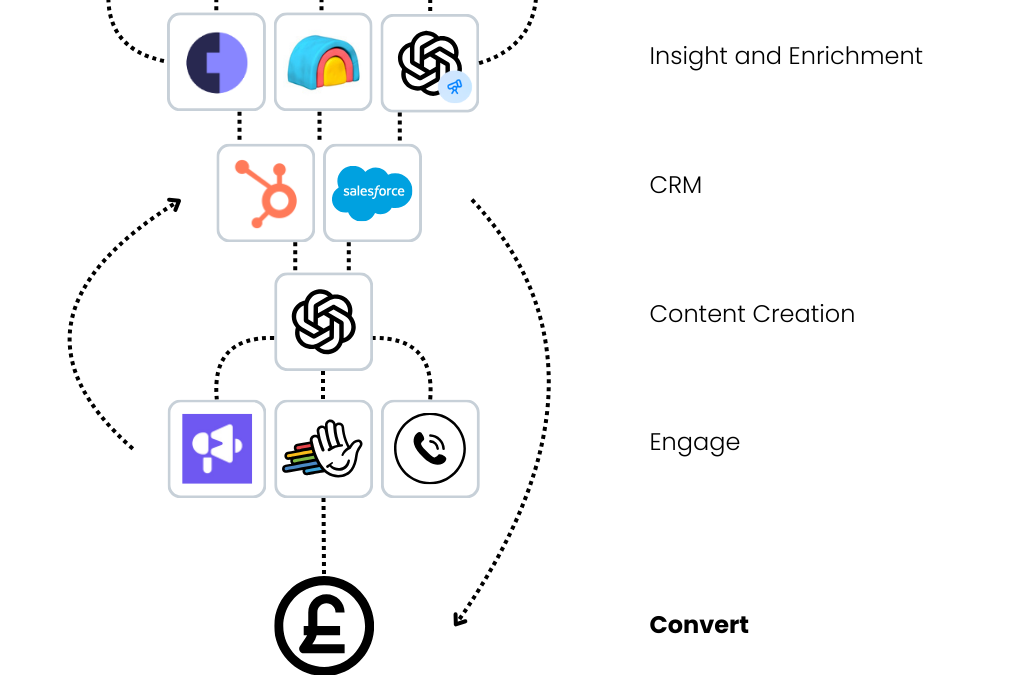
· Marc Price · business-process-automation · 9 min read
The Unsexy Truth About Business Automation (And Why It Still Beats AI Hype)
Automation delivers proven ROI where AI often disappoints. Discover why the boring stuff still wins.
TL;DR
Business process automation delivers proven 20-30% productivity gains with predictable ROI - whilst 45% of AI tools fail to meet expectations. Your ERP and job management systems probably work fine; the problem is scope drift and manual workarounds that have accumulated over years. Automation can extract data from legacy systems, merge it usefully, and sync back without expensive replacements. The test is simple: if staff complain about repetitive, boring tasks, that’s your automation opportunity.
Why Is Everyone Talking About AI When Automation Still Works Better?
Here’s an uncomfortable truth the AI vendors won’t tell you: automation - plain, boring, rule-based automation - still outperforms AI for most business processes.
The numbers bear this out. According to McKinsey, companies implementing workflow automation see 20-40% productivity gains with payback periods measured in months. Meanwhile, 45% of martech leaders report that AI agents fail to meet expectations (Gartner, October 2025). That’s nearly half of all AI implementations disappointing the people who championed them.
This isn’t to say AI has no place in your business. It absolutely does. But if you’re struggling with manual data entry, spreadsheet reconciliation, or staff spending hours on tasks a computer could handle in seconds, you don’t need artificial intelligence. You need automation.
The distinction matters because automation is cheaper, faster to implement, and far more predictable in its outcomes.
What Happened to All Those Systems You Invested In?
Cast your mind back to when your business invested in its ERP, job management system, or CRM. Perhaps it was 2015. Maybe 2010. The implementation was likely painful, expensive, and took longer than anyone promised.
But it worked. The system did what it was supposed to do. Staff were trained, processes were documented, and for a while, everything ran smoothly.
Then something happened. Slowly, almost imperceptibly, the scope drifted.
Someone needed a report the system couldn’t produce, so they exported to Excel. A new product line didn’t quite fit the existing categories, so a workaround was created. A key person left and their successor did things slightly differently. A merger brought new requirements that nobody could quite integrate.
Now, a decade later, you probably have:
- Manual exports running alongside automated ones
- Spreadsheets that reconcile data between systems
- Duplicate entry across multiple platforms
- Tribal knowledge about “how things actually work”
- Staff who spend up to 30% of their time on administrative tasks the system was meant to handle
Sound familiar? You’re not alone. About 65% of mid-market businesses are estimated to be running ERPs more than five years old, and most have experienced exactly this kind of drift.
Why Ripping Out Your Legacy Systems Is Usually the Wrong Answer
When executives see the accumulated inefficiency, the tempting response is transformation. New system. Clean slate. Modern architecture.
Here’s why that’s usually a mistake.
| Approach | Typical Cost | Time to ROI | Risk Level |
|---|---|---|---|
| Full ERP replacement | £500K-£2M | 18-36 months | High |
| Integration layer automation | £20K-£100K | 3-6 months | Low |
| Point-to-point integrations | £10K-£50K | 1-3 months | Medium |
According to Gartner, by 2027, more than 70% of recently implemented ERP initiatives will fail to fully meet their original business use case goals. As many as 25% of these will fail catastrophically. That’s not a statistic - it’s a near-certainty. And during those 18-36 months of implementation, your competitors aren’t standing still.
The integration layer approach - adding intelligence and automation without replacing infrastructure - delivers ROI ten times faster with a fraction of the risk.
What Does Modern Automation Actually Look Like?
At Aandai, we work with businesses that have exactly this problem: good systems that have drifted from their original purpose, now surrounded by manual workarounds and spreadsheet chaos.
The approach is straightforward:
1. Securely pull data from legacy systems
Ideally, we would connect to your ERP via an API, but even this isn’t essential. We can work with exports, database connections, or even screen scraping where necessary. The key is doing this securely, with proper authentication and audit trails.
2. Merge and present data usefully
Often the problem isn’t that data doesn’t exist - it’s that it’s trapped in silos. Automation can combine information from multiple sources into dashboards, reports, or feeds that actually help staff do their jobs.
3. Sync back to legacy infrastructure
This is the bit most “solutions” miss. It’s not enough to create a shiny new interface if staff still have to manually update the original system. Proper automation writes back, ensuring nothing gets lost and the system of record stays accurate.
In most cases, writing back via an API is the best solution. But there are various options to output data in a way your ERP can ingest it. Worst case, we streamline the process so it’s just a simple list of actions to process manually.
The result? Staff stop doing repetitive data entry. Reports generate themselves. Reconciliation happens automatically. And your existing investment in infrastructure continues to deliver value.
How Do You Find Automation Opportunities in Your Business?
Here’s the simplest diagnostic you’ll ever run: ask yourself this question.
Are there processes in your business that people complain about having to do?
Not complex strategic work. Not creative tasks. The boring stuff. The repetitive stuff. The things that make good people question why they’re spending their professional lives copying data from one system to another.
If your answer is yes - and it almost certainly is - you’ve found your automation opportunity.
Common candidates include:
- Order processing and fulfilment updates
- Invoice reconciliation
- Report generation and distribution
- Data validation and cleanup
- Customer communication triggers
- Stock and inventory updates
- Timesheet and expense processing
Each of these represents hours - sometimes days - of staff time that could be redirected to work that actually generates revenue.
What’s the Real Cost of Manual Processes?
Let’s do some rough maths.
According to research by Parseur and QuestionPro, in 2025, anual data entry costs businesses an average of about £20,000 per employee annually in lost productivity. That’s not the salary - that’s the value of the time spent on work that adds no value.
If you have five people spending 20% of their time on manual processes, you’re burning £20,000 per year. Ten people at 30%? That’s £60,000.
But the direct cost isn’t even the biggest problem.
The indirect costs are worse:
- Error rates: Manual processes have error rates of 1-5%. Automation drops this to near zero.
- Speed: What takes a person an hour takes automation seconds.
- Scalability: Manual processes don’t scale. Double your volume and you double your costs.
- Staff retention: Employee turnover costs 50-200% of annual salary, according to a analysis by Gallup in 2021. Frustration with repetitive tasks is a leading cause of resignation.
That last point deserves emphasis. Good people don’t leave companies because the work is too hard. They are more likely to leave because the work is too tedious. Automation doesn’t just save money - it helps you keep the staff you’ve invested in developing.
When Should You Actually Use AI Instead?
AI absolutely has its place. But it’s not where most vendors want you to think.
Use automation when:
- Tasks are repetitive and rule-based
- Outcomes need to be predictable
- Speed and accuracy are priorities
- You need to integrate existing systems
Use AI when:
- Tasks require judgement or interpretation
- Inputs are variable or unstructured
- You need to identify patterns in large datasets
- Natural language understanding is required
The honest truth is that most businesses need automation first. Clean, structured, automated processes create the foundation that AI needs to work effectively. Trying to implement AI on top of messy manual processes is why nearly half of those implementations fail.
What Should You Do Next?
If you’ve recognised your business in this article - systems that have drifted, manual workarounds everywhere, staff frustrated by repetitive tasks - here’s a straightforward next step.
Audit your current processes. Not with expensive consultants or lengthy discovery phases. Just walk around and ask people:
- What do you spend time on that feels like a waste?
- What spreadsheets do you maintain that “shouldn’t” exist?
- What information do you have to look up in multiple places?
- What tasks do you dread because they’re boring but necessary?
The answers will tell you exactly where automation can help.
Ready to Stop Wasting Time on Manual Processes?
At Aandai, we specialise in exactly this problem: connecting legacy systems, eliminating manual workarounds, and freeing staff to focus on work that actually matters.
We’re not here to sell you a new ERP or convince you that AI will solve everything. We’re here to make your existing infrastructure work properly - often in weeks rather than months.
Book a free automation audit and we’ll identify the three biggest time-wasters in your business processes. No obligation, no lengthy sales process. Just practical recommendations you can act on immediately.
Book your free automation audit
Frequently Asked Questions
What’s the difference between automation and AI?
Automation follows predefined rules to complete repetitive tasks consistently. AI uses machine learning to make decisions and handle variability. Most businesses benefit more from automation first - it’s cheaper, more predictable, and delivers faster ROI. Think of automation as “if this, then that” logic applied at scale, whilst AI is pattern recognition and decision-making.
How do I know if a process is ready for automation?
Look for tasks that are repetitive, rule-based, time-consuming, and prone to human error. If staff complain about doing the same boring thing repeatedly, that’s your signal. The process should also be documented and consistent - if every person does it differently, you need to standardise before you automate.
Can automation work with legacy ERP systems?
Yes, and this is often the most valuable application. Modern integration approaches can pull data from legacy systems without replacing them - through APIs, database connections, or file exports. This delivers ROI in months rather than the years required for full system replacements.
What ROI can I expect from business process automation?
Companies typically see 20-30% productivity gains from well-implemented automation. The payback period is usually 3-12 months, compared to 18-36 months for major system replacements. Individual processes can show even more dramatic improvements - we’ve seen data reconciliation tasks reduced from hours to minutes.
Should I automate before implementing AI?
Usually yes. Automation creates the clean, structured data that AI needs to work effectively. Many AI implementations fail because the underlying processes and data aren’t ready. Get the foundations right first, then add intelligence where it genuinely adds value.
How do I find automation opportunities in my business?
Ask your staff what tasks they find repetitive and frustrating. Follow the workarounds - personal spreadsheets, email folders, sticky notes. These unofficial systems reveal where your official processes are failing. The things people complain about are almost always the things automation can fix.
Marc Price is the founder of Aandai, a B2B automation and AI consultancy helping mid-market businesses achieve more with less. With 24+ years in B2B technology marketing, Marc specialises in connecting legacy systems, eliminating manual processes, and implementing practical AI solutions that deliver measurable ROI.